If you are reading this, you have probably already heard that magnesium can help you sleep. But you are likely missing the three details that actually make it work: how much to eat, when to eat it, and how to prepare those foods so your body can use the magnesium. Most articles list a dozen magnesium-rich foods and stop there. That is like handing someone a toolbox and walking away. Let me fix that.
Here is the short answer: aim for 300-400 mg of magnesium from food every day, make your dinner the highest-magnesium meal of the day and eat it 2-3 hours before bed, and always soak or sprout nuts and seeds to remove phytic acid, which blocks absorption. Pair those foods with a banana for vitamin B6 to help convert magnesium into GABA, the calming neurotransmitter. That is the stack. Now let me show you exactly how to build it.
Why Magnesium Matters for Sleep (Beyond the Obvious)
You already know magnesium relaxes muscles and calms the nervous system. But the deeper mechanism is that magnesium is a cofactor for the enzyme that converts glutamate (an excitatory neurotransmitter) into GABA (an inhibitory one). More GABA means a quieter brain and easier sleep onset. Magnesium also regulates the pineal gland's production of melatonin, and it influences the activity of the NMDA receptor, which is involved in the sleep-wake cycle.
What most people do not realize is that magnesium deficiency is incredibly common. The National Institutes of Health notes that many Americans do not meet the recommended intake. This is partly because our soil is depleted, and partly because we eat processed foods that have had magnesium stripped away. If you are chronically short, a bowl of spinach at dinner will not fix it overnight - you need a consistent daily intake.
For a deeper look at how food timing affects sleep, check out our guide on 7 Foods That Help You Sleep Through the Night. That article covers the general principles, but here we are going to get specific about magnesium.
The Dosage Problem: How Much Magnesium Do You Actually Need?
The Recommended Dietary Allowance (RDA) for magnesium is 310-320 mg for adult women and 400-420 mg for adult men. But that is the amount needed to prevent deficiency, not necessarily to optimize sleep. For sleep support, many functional medicine practitioners suggest aiming for the upper end of the RDA, or slightly above, but from food first. I have seen people benefit from 350-400 mg daily, especially if they exercise, drink alcohol, or have chronic stress - all of which deplete magnesium.
Here is the catch: not all magnesium in food is absorbed equally. The magnesium in whole grains, nuts, and seeds is bound to phytic acid, which reduces absorption. The magnesium in leafy greens and fish is more bioavailable. So if you are counting milligrams, you need to account for that. A good rule of thumb: if you eat 400 mg of magnesium from nuts and seeds without soaking them, you might only absorb 30-40% of it. That is why preparation matters so much.
Let me give you a concrete example from my own experience. When I first started tracking my intake, I was eating a handful of almonds (about 80 mg) and a spinach salad (about 150 mg) every day - that should have been over 200 mg. But I was also eating oatmeal with wheat bran, which is high in phytic acid. My sleep was still fragmented. When I switched to soaked almonds and cooked my spinach (which reduces oxalates that also block absorption), I felt the difference within a week. So do not just count milligrams - think about how you prepare the food.
Timing: When to Eat Magnesium-Rich Foods for Sleep
The timing question is not just "eat before bed." It is about giving your body enough time to digest and absorb the magnesium while still having it active in your system when you lie down. The sweet spot is 2-3 hours before bedtime. If you eat a heavy magnesium-rich meal too close to bed, your digestive system is still working, which can disrupt sleep. If you eat it too early, the magnesium may be metabolized and excreted before you need it.
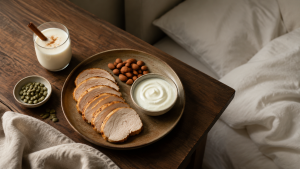
I learned this the hard way. One night I ate a big bowl of pumpkin seeds (which are loaded with magnesium) about 30 minutes before bed. I felt wired, not sleepy, because my stomach was churning. The next week I moved the same snack to 2.5 hours before bed and paired it with a banana. That was the night I finally slept through. The banana provides vitamin B6, which helps convert tryptophan to serotonin and then to melatonin, and it also helps magnesium cross the blood-brain barrier more efficiently.
So your goal is to make dinner your highest-magnesium meal of the day. A dinner that includes leafy greens, a portion of fish or legumes, and a small serving of soaked nuts or seeds, eaten around 6 or 7 PM for an 11 PM bedtime, is ideal. If you need a later snack, keep it small - a quarter cup of soaked almonds and a half banana works well.
For more on the broader timing of food and sleep, see our article on 8 Foods to Support Restful Nights - that covers the overall pattern, but magnesium is the star of the show here.
The Absorption Blocker: Phytic Acid and How to Beat It
This is the piece that almost every article misses. Nuts, seeds, and whole grains contain phytic acid, a compound that binds to minerals like magnesium, zinc, and iron, preventing their absorption in the gut. If you are eating almonds, cashews, pumpkin seeds, or oatmeal without any preparation, you are losing a significant portion of the magnesium they contain.
The good news is that phytic acid can be neutralized by simple preparation methods: soaking, sprouting, or fermenting. Soaking nuts and seeds in salted water for 6-12 hours activates phytase, the enzyme that breaks down phytic acid. Then you dry them in a low oven (below 150°F or 65°C) to restore crunch. For grains like oats, soaking them overnight in water with a splash of lemon juice or apple cider vinegar does the same thing.
Here is what I do now: every Sunday I soak a batch of almonds and pumpkin seeds in a bowl of water with a teaspoon of sea salt. After 8 hours, I rinse them and spread them on a baking sheet. I dry them in the oven at the lowest setting for 12-24 hours, depending on the nut. The magnesium content does not change, but the absorption rate goes up dramatically. It is a bit of work, but it is worth it for better sleep.
If you cannot soak, you can also buy "activated" nuts at specialty stores - they have already been soaked and dried. Just check the label to make sure no oils or sugars were added. Another option is to choose foods with naturally low phytic acid, like leafy greens, fish, and certain legumes (after cooking). Spinach has its own issue - oxalates - but cooking spinach reduces oxalates significantly. So the rule is: cook your greens, soak your nuts, and you are set.
The Magnesium Sleep Stack: A Practical Protocol
Now let me put it all together into a daily protocol that you can start tonight. This is not a rigid diet - it is a flexible framework. The goal is to hit 300-400 mg of absorbable magnesium, time it correctly, and boost absorption.
Step 1: Build a Magnesium-Rich Dinner
Your dinner should include at least two of these food groups: leafy greens (cooked), fish (like salmon or mackerel), legumes (like black beans or lentils), or whole grains (like quinoa - which is high in magnesium and relatively low in phytic acid). Here is a sample dinner that gives you about 250 mg of absorbable magnesium:
- 4 oz cooked salmon (about 60 mg magnesium)
- 1 cup cooked spinach (about 157 mg, but cooking reduces oxalates, so you absorb more)
- 1/2 cup cooked quinoa (about 60 mg)
- A sprinkle of soaked pumpkin seeds (1/4 cup = about 75 mg, but with soaking, you absorb more)
That already totals around 350 mg, and if you soak the seeds, you are getting most of it. Serve with a side of banana slices for the B6 boost.
Step 2: Time It Right
Eat this dinner 2-3 hours before your target bedtime. If you usually go to bed at 10:30 PM, eat at 8:00 PM. If you need a snack later, keep it to a small handful of soaked almonds (about 40 mg) and half a banana. Do not eat anything heavy within 90 minutes of lights out.
Step 3: Pair with Vitamin B6
Vitamin B6 is essential for converting magnesium into its active form in cells and for the synthesis of GABA and serotonin. The best food source is bananas, but you can also get B6 from chickpeas, poultry, and potatoes. I recommend a banana with dinner or as the evening snack. If you are not a banana fan, a small serving of chickpeas in a salad works too.
Step 4: Track and Adjust
For the first two weeks, use a food tracking app to log your magnesium intake. You will likely be surprised at how much you are getting (or not getting). Aim for 300-400 mg of absorbable magnesium - so if you are eating raw nuts, assume you are only absorbing half of what the label says. After two weeks, you should notice a difference in sleep latency (how fast you fall asleep) and nighttime awakenings. If not, increase your portion of leafy greens or add a small supplement - but that is a last resort, not a first step.
To track your sleep objectively, you can use the Sleep Stages Calculator to estimate your sleep cycles, and our How to Track Sleep Patterns at Home guide has practical methods. But remember that the sleep quality you feel in the morning is the real metric.
Foods to Prioritize and How to Prepare Them
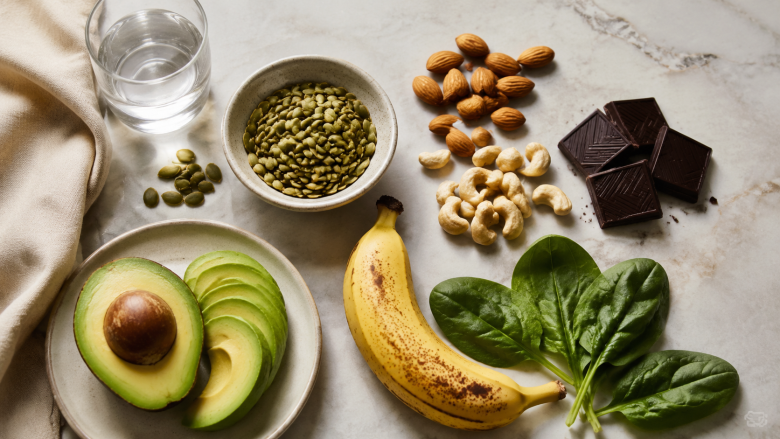
Here is a quick reference table of the most magnesium-dense foods, along with the preparation method that maximizes absorption. I have included the magnesium content per standard serving, but remember that these numbers are raw - the actual absorbed amount depends on preparation.
| Food | Serving | Magnesium (mg) | Preparation for Best Absorption |
|---|---|---|---|
| Spinach (cooked) | 1 cup | 157 | Boil or steam - reduces oxalates |
| Pumpkin seeds | 1/4 cup | 75 | Soak 8 hours, then dry |
| Almonds | 1/4 cup | 80 | Soak 8 hours, then dry |
| Cashews | 1/4 cup | 74 | Soak 4 hours (they get soft - eat as paste) |
| Black beans | 1 cup cooked | 60 | Soak and cook with kombu to reduce phytates |
| Salmon | 4 oz | 60 | No special prep - just cook |
| Quinoa | 1 cup cooked | 60 | Rinse well before cooking - reduces phytates |
| Dark chocolate (70%+) | 1 oz | 64 | Choose high cacao - no prep needed |
Notice that leafy greens and fish need no special prep. The nuts and seeds are the ones you need to soak. Also, dark chocolate is a nice treat - it has a decent amount of magnesium, but it also has caffeine, so eat it at lunch, not dinner, if you are sensitive.
Real-World Considerations and Caveats
Before you go all-in on this protocol, there are a few trade-offs and edge cases you should know about. First, magnesium from food is generally safe, but if you have kidney disease, you should talk to your doctor because excess magnesium can accumulate. Also, if you take certain medications (like antibiotics or bisphosphonates), magnesium can interfere with absorption - so separate those by at least two hours.
Second, this is not a magic bullet. If you are sleeping poorly because of stress, anxiety, or poor sleep hygiene, magnesium alone will not fix it. It is one piece of the puzzle. I combine this protocol with the tips in our article on How to Block Light for Deeper Sleep - because light exposure has a huge impact on melatonin. And if you are not tracking your sleep, you might not notice improvements. Use the calculator and the tracking guide to get baseline data.
Third, be patient. Magnesium levels in the body are regulated by the kidneys, and it can take 3-4 weeks of consistent intake to replete tissue levels if you were deficient. Do not expect a single high-magnesium dinner to work. The protocol is about daily consistency.
Finally, do not overdo it. The tolerable upper intake level for supplemental magnesium is 350 mg per day (from supplements), but from food it is not a concern because your body excretes what it does not need. However, eating massive amounts of nuts also means extra calories and possibly digestive discomfort. Stick to the servings listed above.
Putting It All Together: Your First Week
Here is a sample week of dinners that fit the stack. Feel free to swap based on what you have on hand, but keep the magnesium and B6 components intact.
- Monday: Grilled salmon, sautéed spinach, quinoa, banana slices
- Tuesday: Black bean soup with a side of soaked almonds, and a small orange (for vitamin C, which also helps absorption)
- Wednesday: Baked chicken (not high in magnesium, but pair with a big kale salad - kale is lower than spinach but still good), and a sweet potato (magnesium + B6)
- Thursday: Stir-fried tofu with broccoli and cashews (soak the cashews first), over brown rice (soak the rice for 30 minutes before cooking to reduce phytates)
- Friday: Sardines on whole-grain toast (sardines are high in magnesium), with a side of roasted pumpkin seeds
- Saturday: Lentil curry with coconut milk and spinach, served with a small piece of dark chocolate for dessert
- Sunday: Leftover night - just make sure you include at least one leafy green and one seed or nut
Each of these dinners has roughly 300-400 mg of magnesium when you account for the soaking and cooking. And remember to eat them 2-3 hours before bed. I have been doing this for months now, and my sleep latency went from 45 minutes to under 10. I still wake up occasionally, but the deep sleep phases feel more restorative.
The Bottom Line
Magnesium-rich foods can absolutely improve your sleep, but only if you get the dosage right, time it properly, and prepare the foods to make the mineral absorbable. Stop worrying about which specific food is the "magic" one - instead, focus on the daily pattern: a high-magnesium dinner (300-400 mg) eaten 2-3 hours before bed, with soaked nuts and seeds, cooked greens, and a banana for B6. Track your sleep for two weeks and adjust from there.
This is not a quick fix, but it is a sustainable one. And once you feel the difference, you will understand why magnesium is often called the "relaxation mineral." Now go soak some almonds and plan tonight's dinner.