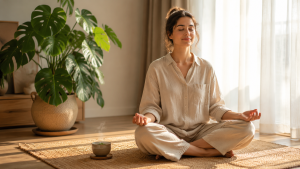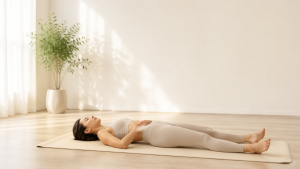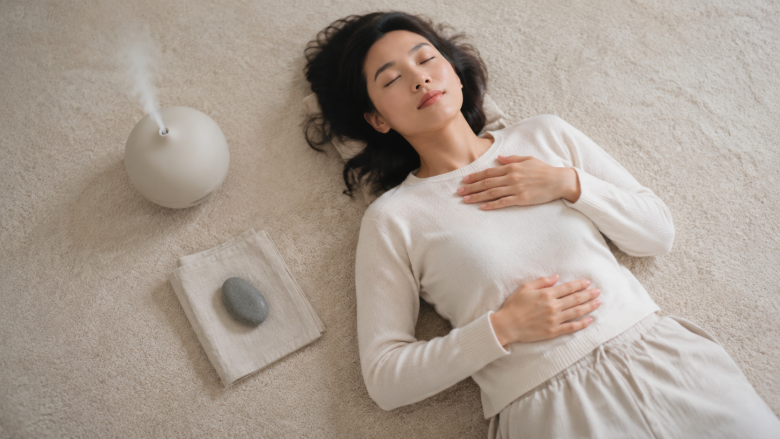
Ever tried to relax and felt even more wound up? You're not alone. Most relaxation advice treats every stressed person the same: take a deep breath, meditate, go for a walk. But if you've tried these and they didn't work, it's because your stress isn't just in your head or just in your body. It's a specific pattern in your nervous system. Matching the right technique to your current stress state - what I call nervous system matching - is the difference between wasting ten minutes on a breathing exercise that leaves you more anxious and actually feeling the tension melt away.
Why One-Size-Fits-All Relaxation Fails
When I first started practicing relaxation techniques, I was a chronic mind-racer. I'd try slow breathing and my thoughts would just get louder. I'd lie down for a body scan and my legs would twitch with restlessness. It wasn't until I learned about the difference between cognitive arousal (racing thoughts) and somatic arousal (physical tension) that I realized I needed different tools for different states.
Your autonomic nervous system has two main branches: the sympathetic (fight-or-flight) and the parasympathetic (rest-and-digest). But it's not a simple on-off switch. Stress can manifest primarily in your mind, primarily in your body, or in both. If you're always doing the same relaxation exercise, you're likely missing the target.
For example, a person who is mentally overactive but physically calm might benefit from cognitive distraction, not progressive muscle relaxation. Conversely, someone who is physically tight but mentally clear might need to release muscle tension before they can feel relaxed. This article will help you identify which type you are and give you specific micro-practices that actually work in two minutes or less.
What Is Nervous System Matching?
Nervous system matching is a simple concept: identify whether your stress is primarily mental (cognitive) or physical (somatic), then choose a technique that directly addresses that dominant pathway. It's not about labeling yourself permanently; your stress type can shift daily, even hourly.
Here's a quick way to think about it. If you're sitting at your desk and your mind is spinning with to-do lists, but your body feels still, that's cognitive stress. If you're driving and you notice your jaw is clenched and your shoulders are up to your ears, but your thoughts are clear, that's somatic stress. And if you have both - racing thoughts and a knot in your stomach - you need a combined approach.
Most relaxation techniques fall into one of two categories: top-down (they start with your brain, like meditation or visualization) or bottom-up (they start with your body, like breathing or progressive muscle relaxation). Matching means picking the right direction for your current state.
Take the 2-Minute Stress Type Quiz
Answer these five questions with A or B. Be honest - there's no right or wrong answer. Tally your results after.
- When stress hits, what's your first reaction?
- A) My thoughts start spinning - I replay conversations, plan, worry about the future.
- B) My muscles tighten - I feel a knot in my stomach, my shoulders creep up, or my jaw clenches.
- After a long, stressful day, what's most noticeable?
- A) Mental fatigue - I can't switch off, my brain keeps reviewing the day.
- B) Physical exhaustion - my back aches, my neck is stiff, or I have a headache.
- If you try to meditate, what typically happens?
- A) Thoughts intrude constantly - I get frustrated and give up.
- B) I feel restless - I can't sit still, my body needs to move.
- When you wake up after a stressful week, what do you feel?
- A) Brain fog, anxious thoughts, maybe a sense of dread.
- B) Stiffness, soreness, low energy, tightness in your chest.
- When you exercise, how does it affect your stress?
- A) It clears my head - I feel mentally sharper afterward.
- B) It releases tension - I feel physically looser and more relaxed.
If you answered mostly A's, you're a mind-busy type. Mostly B's, you're body-tight. If it's a tie, you're mixed. We'll cover techniques for each, so read the section that fits your primary type. If you're mixed, read both and combine them.
Why Some Relaxation Techniques Backfire (And What to Do Instead)
You might have tried meditation and felt more anxious. That's a known phenomenon called relaxation-induced anxiety. When you sit still and your mind wanders, your brain might interpret the lack of stimulation as a threat, especially if you're used to being busy. If that happens, don't force it. Instead, use a technique that gives your brain a task, like the cognitive shuffle.
Similarly, if you're physically tight and you try to just breathe slowly, you might find that you can't relax because your muscles are still clenched. Your nervous system won't fully shift to rest until your body releases the tension. That's why PMR is more effective than breathing alone for somatic stress.
Another mistake is doing the technique too quickly. For example, many people do the physiological sigh but rush the exhale. The exhale must be long and slow. If you exhale too fast, you'll actually stimulate your sympathetic system. Practice it a few times to get the timing right.
Finally, don't expect immediate results. Some techniques take a few days of practice before they feel natural. For example, diaphragmatic breathing can feel strange at first. But with practice, it becomes easier. Give yourself a week to try each technique before deciding if it works for you.
For Mind-Busy Stress: Techniques That Calm Racing Thoughts
If your stress is primarily cognitive, you need to give your brain something else to do - not just tell it to stop thinking. Here are three micro-practices that work in two minutes or less.
The 90-Second Physiological Sigh
You've probably heard of deep breathing, but the physiological sigh is different. It's a specific pattern: two quick inhales through your nose, followed by a long, slow exhale through your mouth. The double inhale inflates your lungs more fully, which slows your heart rate and activates your parasympathetic nervous system.
Try it now: Inhale through your nose for 2 seconds, then take a second short sniff to top off your lungs. Exhale slowly through your mouth for 5 to 8 seconds. Repeat for three to five cycles. I've found this works better than any other breathing exercise when my mind is spiraling. The key is the extended exhale - it's longer than the inhale, which signals your body it's safe.
When I first tried this, I was skeptical. But after a particularly stressful meeting, I stepped into the bathroom and did three sighs. Within a minute, my heart rate dropped noticeably. It's now my go-to for acute mental stress.
The Cognitive Shuffle
When your thoughts are stuck on a loop, your brain is actually hunting for a new target. The cognitive shuffle - developed by sleep researcher Luc Beaudoin - uses this to your advantage. You think of a random word, then for each letter, you think of another random word starting with that letter. For example, if the word is "BED", you think: banana, elephant, desk. You do this repeatedly until your brain gives up on the anxiety loop.
This technique works because it mimics the random thought patterns that occur as you fall asleep. It's not about forcing your mind blank; it's about giving it a boring task that doesn't engage your emotional centers. I use this when I'm lying in bed and my mind won't shut up about tomorrow's presentation.
Grounding with 5-4-3-2-1
This is a classic but often misused. The proper way: Name 5 things you can see, 4 you can feel, 3 you can hear, 2 you can smell, and 1 you can taste. The key is to do it slowly and deliberately, not as a checklist. It forces your brain to shift from abstract worry to concrete sensory input, which interrupts the cognitive loop.
I've found this works best when I'm at my desk and my thoughts are spiraling about an email I need to send. I look around and name five objects, then feel three textures, etc. It doesn't eliminate the stress, but it brings me back to the present moment, which is where I can actually take action. If you're driving, keep your eyes on the road and focus on what you can see, feel, and hear - skip the taste and smell if they're not accessible.
For Body-Tight Stress: Techniques That Release Physical Tension
If your stress is primarily somatic, your nervous system is holding the tension in your muscles and fascia. You need bottom-up techniques that release that physical tightness. Here are three that work quickly.
Progressive Muscle Relaxation (PMR) - The 2-Minute Version
PMR involves tensing a muscle group for 5 seconds, then releasing for 10 seconds. The full version takes 15-20 minutes, but you can do a quick 2-minute version that targets the major areas: hands, shoulders, jaw, and face.
Here's the mini version: Clench your fists tightly for 5 seconds, then release and notice the warmth. Next, shrug your shoulders up to your ears for 5 seconds, then drop them. Then, scrunch your face (eyes, nose, mouth) for 5 seconds, then release. Finally, press your tongue to the roof of your mouth for 5 seconds, then relax. Do this sequence twice.
I used to think PMR was too slow, but I've learned that the key is to really feel the contrast between tension and release. The release phase is where your parasympathetic system kicks in. The 2-minute version is perfect for a quick reset in a stressful moment, like before a meeting.
Diaphragmatic Breathing (Belly Breathing)
Many people breathe from their chest when stressed, which only ramps up your sympathetic nervous system. Diaphragmatic breathing forces your diaphragm to engage, which sends a "rest" signal to your brain. The trick is to make your exhale longer than your inhale, and to expand your belly, not your chest.
Place one hand on your chest and one on your belly. Inhale through your nose for 4 seconds, feeling your belly rise. Exhale through your mouth for 6 seconds, feeling your belly fall. Repeat for 2 minutes. If you do this correctly, your chest hand barely moves.
I've seen people do this wrong for years - they just breathe deeply but their chest rises. The belly expansion is crucial. I tell my clients to imagine a balloon inflating in their stomach. This technique is especially effective for reducing heart rate and decreasing muscle tension in your neck and shoulders, because it encourages your upper body to let go.
Self-Massage and Trigger Point Release
If you hold stress in your shoulders, neck, or jaw, a quick self-massage can work wonders. You don't need a fancy tool - just your fingers or a tennis ball. Focus on the trapezius muscles (the shoulder blades) and the masseter (jaw). Use gentle pressure and small circles for 30 seconds per spot.
For your jaw, place your index and middle fingers on the muscle just in front of your ear and press gently as you open and close your mouth. This releases the tension that often causes teeth clenching. I keep a tennis ball in my desk drawer and roll it against the wall behind my shoulders when I feel tight.
The key is to breathe slowly while you do this. The combination of physical pressure and slow breathing helps your nervous system shift to rest-and-digest.
When You're Stuck in Both: Combined Approaches
If you're mixed type - or you have a day where both your mind and body are on high alert - you need a combined approach that addresses both pathways simultaneously. Here's a 5-minute reset that I use with clients who can't decide which type they are.
The 5-Minute Reset
- Start with 3 physiological sighs (as described above) to activate your parasympathetic system.
- Then do the 2-minute PMR mini version to release physical tension.
- Finish with 1 minute of 5-4-3-2-1 grounding to settle your thoughts.
This sequence works because it starts with a quick physiological shift, then releases the body, then calms the mind. I've found that doing it in this order is more effective than any single technique. It's like hitting the reset button on your nervous system.
Yoga Nidra for Deep Rest
Yoga nidra is a guided meditation that brings you to a state between sleep and wakefulness. It's different from regular meditation because it systematically relaxes each body part while also using visualization to calm the mind. It's the ultimate combined approach.
You can find free 10-minute yoga nidra recordings online. I recommend doing it when you have a bit more time - like after work or before bed. It's not a quick fix, but it's incredibly effective for resetting your entire nervous system. I've seen clients who struggle with both anxiety and chronic pain benefit greatly from daily yoga nidra.
Emergency Techniques for Acute Stress
There are moments when stress hits so hard that you can't even think about matching techniques. In those cases, your nervous system is in full fight-or-flight mode, and you need something that bypasses your cognitive brain entirely.
The physiological sigh works here too, but if you're having a panic attack, try splashing cold water on your face. The cold water triggers the mammalian dive reflex, which quickly slows your heart rate and redirects blood flow. It's a powerful physical interrupt.
Another option is to tense your entire body for 10 seconds, then release all at once. This is like a reset for your nervous system. It's a bit more intense than PMR but works in seconds.
If you're in a public place and can't do these, just focus on the physical sensation of your feet on the ground and your hands on your thighs. Name one thing you can see, one thing you can feel, and one thing you can hear. This simple grounding can prevent a spiral.
How to Build a Sustainable Practice
Relaxation isn't a one-time thing. It's a skill that improves with practice. But you don't need to spend an hour a day. The key is consistency and matching your technique to your current state.
Here's a simple framework: Every few hours, check in with yourself. Ask, "Am I more mentally agitated or physically tense?" Then pick a 2-minute micro-practice that matches. Over time, you'll get better at recognizing your stress patterns and responding quickly.
I recommend setting a reminder on your phone for three times a day. When it goes off, take 30 seconds to assess, then do a 2-minute practice. That's only 6 minutes a day, but it can significantly change your baseline stress level.
If you find that your stress is worse at night and it's affecting your sleep, you might also want to look at your body clock. Our body clock sync sleep plan can help you align your sleep schedule with your natural rhythms, which can reduce both mental and physical stress.
One thing I've learned is that relaxation techniques are not a substitute for addressing the root cause of your stress. If you're in a toxic job or relationship, no amount of sighing will fix that. But these techniques can give you enough clarity and calm to make better decisions.
For a science-backed overview of various relaxation techniques, the National Center for Complementary and Integrative Health (NCCIH) has a comprehensive guide.
When to Seek Professional Help
While these techniques are effective for everyday stress, they're not a replacement for professional care. If you experience any of the following, consider talking to a therapist or doctor:
- Persistent anxiety or depression that interferes with daily functioning
- Panic attacks that happen regularly
- Chronic pain or tension that doesn't improve with relaxation
- Sleep problems that last more than a few weeks
- Physical symptoms like chest pain, shortness of breath, or rapid heartbeat without a clear cause
Relaxation techniques are a great first line of defense, but they're not a cure-all. A mental health professional can help you develop a more comprehensive strategy, including therapy and possibly medication.
Final Thoughts: Your Next Step
The next time you feel stressed, don't automatically reach for the same old breathing exercise. Take a moment to check in: Is your mind racing, or is your body tight? Then choose one technique from the matching section. Even 90 seconds can make a difference.
I've been using this approach for years, and it's transformed how I handle stress. Instead of feeling like a victim of my nervous system, I feel like I have a toolkit. And that sense of agency is itself calming.
Start with one technique today. Try it the next time you feel your stress rise. Notice what happens. Over time, you'll become fluent in your own nervous system, and relaxation will become more automatic.
And remember, it's not about perfection. Some days you'll be too stressed to do anything. That's okay. The goal is progress, not perfection.