The Short Answer: Yes, But Not for the Reason You Think
You've heard it a hundred times: put down your phone an hour before bed. But does that actually improve sleep? The honest answer is yes, but not primarily because of the blue light. The bigger factor is what you're not doing when you're on a screen - and what you might be doing instead.
When I first tried to enforce a screen-free hour with my own family, I made the mistake of simply removing the tablet without a plan. The result was a meltdown that lasted longer than the screen time would have. I learned that unplugging only works when you replace the screen with something genuinely engaging. That's the real science.
Research supports the link between screens and poor sleep, but the effect size is modest. A 2019 study in JAMA Pediatrics found that screen time in bed was associated with shorter sleep duration and later bedtime, but the absolute difference was small - about 10 minutes less sleep. The real problem isn't the screen itself; it's that screens often displace wind-down time and keep your brain engaged.
Where Do Popular Screen-Free Rules Come From?
It helps to know the origin of the rules you keep hearing. The 3-6-9-12 rule for screen time was proposed by French psychiatrist Serge Tisseron. It suggests: no screens before age 3, no personal screens before age 6, no internet before age 9, and no unsupervised internet before age 12. It's a general parenting guideline, not a sleep-specific recommendation - but many parents adapt it for bedtime.
The 3-3-3 rule for sleep is less standardized. You'll see variations: 3 hours before bed - stop eating; 3 hours before bed - stop drinking alcohol; 3 minutes before bed - do a relaxation exercise. Another version says: 3 hours before bed - no screens, 2 hours - no work, 1 hour - no screens. The lack of consensus tells you these rules are memory aids, not evidence-based protocols.
That's not to say they're worthless. Rules give structure, and structure helps bedtime. But when you follow them blindly without understanding why, you might miss the point - or give up when they feel impossible.
The Evidence: What Sleep Research Actually Says About Screens
Let's look at the science behind the screens. There's no doubt that light affects melatonin, the hormone that regulates sleep. The National Heart, Lung, and Blood Institute notes that light can suppress melatonin and shift your circadian rhythm. But the amount of suppression depends on intensity, wavelength, and duration of exposure. A dim phone in night mode is far less disruptive than a bright TV in a dark room.
More importantly, the content matters. Scrolling through social media or reading work emails keeps your brain in a state of cognitive arousal. That's the opposite of the relaxation you need before sleep. A study in Sleep Medicine Reviews found that interactive screen use (like gaming) has a stronger negative effect on sleep than passive viewing (like watching a movie).
So when you unplug, you're not just avoiding blue light; you're avoiding the mental stimulation that makes it hard to fall asleep. That's why a screen-free hour works - but only if you fill that hour with activities that actually calm your nervous system.
What About the 3-6-9-12 Rule for Bedtime?
Applying the 3-6-9-12 rule to bedtime specifically means no screens for younger children and limited use for older ones. For a 5-year-old, that means no tablet in bed. For a 10-year-old, it means no internet after a certain hour. The rule is a reasonable starting point, but it doesn't account for individual differences. Some kids can watch a calm show and fall asleep fine; others get wired from the same show.
The key is to observe your child's response. If they're still asleep within 15 minutes of lights out and wake up rested, your current approach is fine. If they're tossing and turning, it's time to adjust. The rule is a guideline, not a law.
A Flexible, Evidence-Based Framework Instead of Rigid Rules
Instead of following a one-size-fits-all rule, use a framework that adapts to your life. I call it the "Unplugging Framework" - it has three components: timing, content, and behavior substitution.
- Timing: Decide how long before bed you should stop screens. For most adults, 30-60 minutes is enough to see a benefit. For kids, 60-90 minutes works well because their sleep cycles are shorter and they need more wind-down time. But start with what's realistic. A busy parent might only manage 15 minutes - that's still better than nothing.
- Content: If you must use a screen, choose passive, calming content. A guided meditation video, a nature documentary, or a slow-paced audiobook with visuals are better than news, social media, or action movies. Even better, use audio-only (like a podcast) so you're not exposed to light at all.
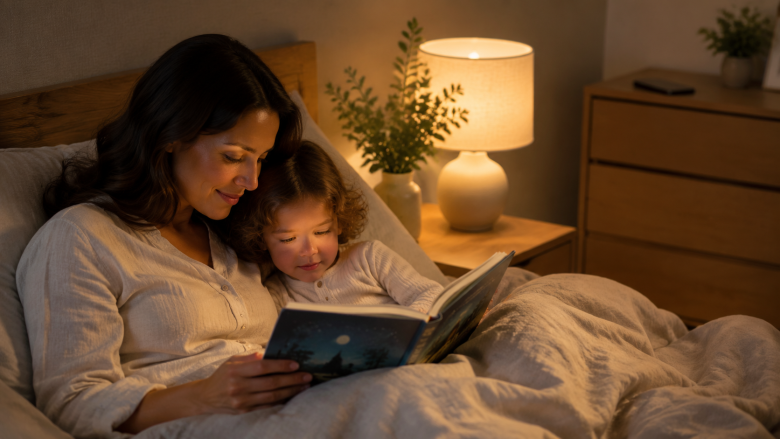
- Behavior substitution: This is the part most people miss. You can't just remove screens; you need to replace them with activities that signal sleep. Reading a physical book, gentle stretching, journaling, or having a conversation with a partner all work. The goal is to lower your heart rate and shift your brain from "doing" mode to "being" mode.
This framework is more realistic than a rigid rule because it acknowledges that screens aren't inherently bad. It's the context that matters.
How to Apply the Framework for Kids
For children, the same principles apply, but you need to adjust the activities. A 2-year-old won't journal, but they can do a picture-book walkthrough. A 10-year-old might enjoy a family board game or a quiet chat. The key is to make the screen-free time feel like a treat, not a punishment.
When I worked with a family who had a 6-year-old who refused to stop watching cartoons at night, we created a "bedtime menu" - a visual list of 10 non-screen activities they could choose from. The child picked two each night. Within a week, the nightly battle ended. The structure gave the child a sense of control, and the parent didn't have to play bad cop.
Practical Experience: What Actually Happens When You Unplug
Let me walk you through a real scenario. My client, a busy working parent, insisted on a screen-free bedtime routine for her two kids, ages 7 and 10. She tried the "Power Down Hour" - one hour of no screens before bed. The first night, the kids complained, but she pushed through. The second night, they were restless. By the third night, they had found a puzzle in the closet and were working on it together. Within a month, they started asking for that time to talk about their day.
The thing nobody tells you about unplugging is that the first 10 minutes are the hardest. Your brain is used to constant stimulation. When you remove it, you feel a spike of anxiety. But if you push through, your brain recalibrates. After about 15 minutes of a calming activity, your heart rate drops, and you genuinely feel sleepier.
Another thing most people don't realize: unplugging works even if you don't do it perfectly. One night, my family was traveling, and we had no books. We ended up doing a guided breathing exercise on a phone app - technically a screen, but we kept the phone on night mode and faced away from us. We all slept fine. The rule isn't "zero screens"; it's "zero stimulating screens."
Common Mistakes and How to Avoid Them
Here are the pitfalls I've seen in my own life and with clients:
- Going cold turkey: If you've been using screens until lights out, cutting them off completely at 7 PM will feel like a shock. Instead, taper off. Move screen time 15 minutes earlier each night until you reach your target.
- Using screen time as a reward: "If you put on your pajamas, you can watch one show" makes screens more desirable. Instead, make the screen-free activity the reward - like choosing a special book or a family game.
- Not setting an example: If you're scrolling on your phone during the screen-free hour, your kids will call you out. Put your own phone in a drawer. For adults, that also means not checking work email.
- Ignoring weekends: Consistency matters. It's fine to relax the rules on Friday night, but if you let screens run wild on weekends, Monday night becomes a battle.
- Forgetting that some screens are tools: If you use a white noise machine or a sleep tracker, that's not the same as social media. Don't throw out the baby with the bathwater.
The 3-6-9-12 Rule: Does It Hold Up to Scrutiny?
Let's examine the 3-6-9-12 rule as it's often applied to bedtime. The rule doesn't specify a time limit for screens before bed; it's about age-based restrictions. For example, a 5-year-old shouldn't have any personal screen time, so bedtime screens are out. A 10-year-old can have internet access, but not unsupervised - so they might be allowed to watch a show on a shared family device, but not alone in their room.
From a sleep perspective, the rule is a good foundation. It limits overall screen exposure, which indirectly helps sleep. But it's not tailored to individual sleep needs. A 4-year-old who naps well and sleeps 11 hours at night might be fine with a 15-minute video before bed as part of a calming routine - but the rule says no screens at all under 6. That's overly restrictive for some families.
The evidence for the rule comes from developmental psychology, not sleep science. Tisseron's goal was to prevent overexposure and addiction, not to solve insomnia. So if you're using it as a bedtime sleep aid, you need to combine it with other strategies.
The 3-3-3 Rule for Sleep: What It Is and Whether It Works
The 3-3-3 rule for sleep is a mnemonic that many sleep coaches use. The most common version is: 3 hours before bed - stop eating heavy meals; 3 hours before bed - stop drinking alcohol; 3 minutes before bed - do a relaxation technique like deep breathing or progressive muscle relaxation.
There's no single authoritative source for this rule; it's a practical guideline. Does it work? The components are supported by evidence. Eating late can cause indigestion that disrupts sleep, and alcohol fragments sleep even if it makes you drowsy. Deep breathing activates the parasympathetic nervous system, which helps you relax. So the rule is a decent checklist, but it's not comprehensive. It ignores caffeine, light exposure, and stress management.
If you're looking for a simple rule to remember, the 3-3-3 is fine. But if you want something more complete, use the framework I outlined above. The key is to understand the "why" behind each step. For example, when I stopped eating 3 hours before bed, I noticed my acid reflux disappeared and I stopped waking up at 3 AM. That's a real, tangible benefit - but it only came because I understood the mechanism.
Is 10pm to 5:30am Enough Sleep?
That's 7.5 hours. For most adults, the Centers for Disease Control and Prevention recommends 7-9 hours per night. So 7.5 hours falls within the range, but it's on the lower end. The question is whether that's enough for you. Sleep needs vary by genetics, age, and activity level. Some people thrive on 6 hours; others need 9.
More important than the total number is the quality and consistency. If you sleep 7.5 hours but wake up multiple times, you're not getting restorative sleep. Also, if your schedule shifts on weekends, you might be accumulating sleep debt. A good rule of thumb: if you need an alarm to wake up and feel groggy for the first 30 minutes, you're not getting enough.
If you're aiming for 10 PM to 5:30 AM, make sure your sleep environment supports deep sleep: cool room, dark, quiet. And if you're consistent with that schedule, your body will adapt. But if you have a 10 PM bedtime and you're still scrolling until 9:50, you're not giving yourself a wind-down period. That's where a screen-free routine becomes essential.
A Step-by-Step Screen-Free Bedtime Routine You Can Adapt
Here's a flexible template that works for adults and kids. Adjust the timing based on your schedule.
60 minutes before bed: Dim the lights in your home. Turn off bright overheads and switch to lamps or candles. This signals your circadian rhythm that night is coming. If you must use a screen, switch to night mode and lower the brightness.
45 minutes before bed: Do a light physical activity - gentle stretching, yoga, or a short walk. The goal is to release physical tension, not to elevate your heart rate. For kids, a pillow fight or a game of "freeze dance" can work, but keep it calm.
30 minutes before bed: Shift to a quiet activity. Options: read a physical book, journal, draw, or talk with a partner. For kids, a bedtime story is ideal. If you're a busy parent, this is a good time to connect with your children without screens. As we discussed in our gentle bedtime routine for sound sleep, the key is consistency, not perfection.
15 minutes before bed: Do a relaxation technique. This could be deep breathing, progressive muscle relaxation, or a guided meditation (audio only). For kids, a body scan or a "sleepy story" works well. This is the time to let go of the day's worries.
5 minutes before bed: Get into bed, adjust your pillows, and get comfortable. If you wake up during the night, avoid screens completely. Use a dark room and a white noise machine if needed.
Adapting for Busy Parents
If you're a working parent with limited time, you don't need a full hour. Even 20 minutes of screen-free time before bed can make a difference. The trick is to prioritize the last 15 minutes - that's where the relaxation technique has the most impact. You can also combine steps: listen to a calming podcast while you brush your teeth. For more tips, check out our bedtime routine for busy working parents.
When Screens Are Actually Helpful Before Bed
Let's be honest: not all screen use is bad. For some people, a calming video or a guided meditation app can help with anxiety or racing thoughts. The key is to use screens with intention, not as a mindless scroll.
If you have a chronic sleep disorder like insomnia, a screen-based relaxation tool (like a sleep hypnosis video) might be more effective than trying to read a book that your brain won't focus on. The trick is to keep the screen dim, use night mode, and avoid interactive content.
Another exception: shift workers. If you're trying to sleep during the day, a blackout screen or a light-emitting device might actually help you stay awake when you need to be. The rules change when your schedule is inverted.
The bottom line: the problem isn't the screen; it's the lack of a wind-down period. If you can use a screen without stimulating your brain and without delaying your bedtime, you're fine. But most people can't. That's why the screen-free rules exist.
The Bottom Line: Rethink the Rule, Not the Screen
The science is clear: screen-free time before bed works, but not because of a magical rule. It works because it forces you to slow down, disengage from stress, and prepare your brain for sleep. The 3-6-9-12 rule and the 3-3-3 rule are helpful mnemonics, but they're not evidence-based protocols. They're starting points.
What matters is that you find a routine that fits your life. Start small - maybe 15 minutes of screen-free time - and see how you feel. Track your sleep quality, not just your sleep quantity. If you wake up refreshed, you're on the right track.
When I finally embraced a flexible screen-free routine, I stopped obsessing over the exact time and instead focused on what I did during that time. I read, I stretched, I talked with my family. The result was not just better sleep - it was a calmer evening. That's the real benefit of unplugging.