What Most Body Scan Guides Get Wrong
If you have searched for body scan instructions before, you probably found the same generic advice: lie down, close your eyes, and slowly move your attention from your toes to your head. That works, but it misses the deeper purpose. A body scan is not just a relaxation exercise - it is a direct way to signal safety to your nervous system. When I first started teaching this technique, I noticed that students who treated it as a passive relaxation tool got far less benefit than those who understood the underlying mechanism. Here is what I have learned after a decade of practice.
Most people assume the goal is to make your body feel relaxed. In reality, the goal is to observe what is already there without trying to change it. That shift in intention is what activates the parasympathetic nervous system - the brake pedal of your stress response. The body scan is a form of interoceptive training, which is the science of sensing the internal state of your body. This is not new-age fluff; it has roots in neuroscience and is now used in clinical settings for chronic pain, anxiety, and even PTSD.
Another thing nobody tells you: a body scan can be uncomfortable at first. When you stop distracting yourself, you might notice tightness, restlessness, or even emotional release. That is not a sign you are doing it wrong. It is your nervous system unwinding. I have had clients cry during their first scan, and that is okay. The practice is about creating space for whatever arises, not forcing a particular feeling.
The Science: Why a Body Scan Works (and When It Doesn't)
Let me address the question you are probably asking: does body scan meditation actually work? The honest answer is yes for many people, but not as a magic bullet. According to the National Center for Complementary and Integrative Health, meditation practices can reduce symptoms of anxiety, depression, and pain, but the effects vary by individual and practice consistency. Specifically, body scan meditation has been shown to increase activity in the insula - the brain region that processes bodily sensations - and to lower cortisol levels in some studies.
However, there is a catch. The benefits are not automatic. You have to practice regularly and with the right mindset. If you do a body scan once and expect to feel transformed, you will be disappointed. The real power comes from repetition, much like physical exercise. I have had clients who felt immediate relief, and others who needed two weeks of daily practice before noticing a shift. That is normal.
Another misconception is that a body scan is just about relaxation. It is actually a form of exposure therapy for your internal sensations. By intentionally noticing discomfort without reacting, you teach your brain that these sensations are not threats. This is why it works for chronic pain - not by eliminating the pain, but by changing your relationship to it. A 2018 meta-analysis in Psychosomatic Medicine found that mindfulness-based interventions, including body scans, had moderate effects on pain severity and pain interference, but the quality of evidence varied. I have seen this in my own practice: a client with fibromyalgia reported that after three weeks of daily body scans, her pain intensity did not drop, but her anxiety about the pain did, which made it more manageable.
So does it work? Yes, for many, but it requires patience and regular practice. And it is not a substitute for medical treatment. Think of it as a complement to professional care, not a replacement. If you have a serious medical condition, always consult your doctor before starting any new relaxation practice.
How to Do a Body Scan: The Exact Method I Teach
Now let's get into the practical steps. Here is the method I use with my clients, refined over years of trial and error. You can do this lying down, sitting, or even standing, but lying down is best for a full-body scan.
Step 1: Set up your environment. Find a quiet place where you will not be interrupted. Set a timer for your desired length (I will give you time options in the next section). You can use a dedicated meditation timer app like Insight Timer, or just your phone's timer. Turn off notifications. A comfortable temperature is important - if you are too cold, you will tense up; too warm, you might fall asleep.
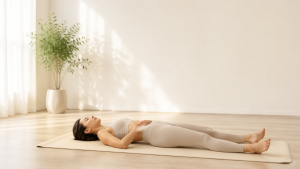
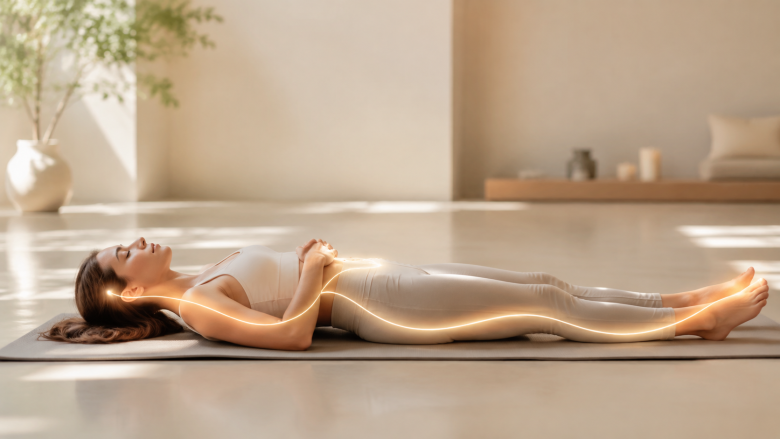
Step 2: Get comfortable. Lie on your back with your arms at your sides, palms up. If that is not comfortable, try a reclined position or sitting in a chair with your feet flat on the floor. The goal is to be alert but relaxed. I personally prefer a thin pillow under my head and a blanket over my body to keep warm, because your temperature drops as you relax. If you are sitting, make sure your spine is straight but not stiff.
Step 3: Take three grounding breaths. Inhale deeply through your nose, filling your belly, and exhale slowly through your mouth. Let your breath settle into its natural rhythm. Do not force it. This signals to your body that you are safe and ready to shift gears.
Step 4: Choose a starting point. I recommend starting at the top of your head and moving down, or at your toes and moving up. There is no right answer, but consistency helps. I start at the crown of my head because it naturally follows the direction of my breath. If you have a particular area of tension, you might start there and expand outward.
Step 5: Move your attention slowly. Spend 20 to 30 seconds on each body part. For example, bring your attention to your forehead. Notice any sensations: warmth, tightness, tingling, or nothing at all. Do not judge. If you feel nothing, that is fine. Then move to your eyes, jaw, neck, shoulders, and so on. On each exhale, imagine the area softening. But do not force it - just observe. I like to use a mental checklist: forehead, eyes, jaw, tongue, neck, shoulders, upper arms, elbows, forearms, wrists, hands, fingers, chest, stomach, lower back, hips, thighs, knees, calves, ankles, feet, toes.
Step 6: When your mind wanders, return. This is the core of the practice. Your mind will wander - that is inevitable. When you notice it, simply acknowledge the thought and bring your attention back to the body part you were on. Do not get frustrated. Each return is a rep for your attention muscle. In the beginning, you might return fifty times in a ten-minute scan. That is normal and actually the point.
Step 7: Finish with a full-body awareness. Once you have scanned every part, spend a minute feeling your body as a whole. Then slowly wiggle your fingers and toes, and open your eyes when ready. Take a moment to notice how you feel before jumping back into your day.
When I first tried a body scan, I made the mistake of trying to force relaxation. I would tense my muscles and then release them, thinking that was the point. But that is not a body scan - that is progressive muscle relaxation. The body scan is about passive attention, not active tensing. The difference is subtle but crucial. Passive attention tells your nervous system that it is safe to let go, while active control can actually keep you in a state of vigilance. I learned this the hard way after a month of practicing incorrectly and wondering why I felt more anxious.
The thing nobody tells you about body scans is that the most important part is the moment you notice your mind has wandered. That moment is where the nervous system reset happens. You are essentially training your brain to catch itself drifting into stress and then return to a neutral, observational state. Over time, this becomes automatic. It is like building a muscle - the more you do it, the faster you can shift states.
How Long Should a Body Scan Be? (And How to Adapt)
One of the most common questions I get is about duration. The answer depends on your goal and your schedule. Here are my recommendations based on time constraints:
- 2-minute mini scan: For a quick reset during a work break or before a stressful meeting. Focus only on your face, shoulders, and jaw - the areas where you hold the most tension. Do this standing at your desk or even in the bathroom stall. It is enough to lower your heart rate and shift your mood.
- 5-minute scan: Good for daily maintenance. You can cover the major areas: head, neck, shoulders, chest, stomach, arms, legs, and feet. This is enough to shift your nervous system out of fight-or-flight mode. I recommend this for busy professionals who cannot spare more time.
- 10-minute scan: The sweet spot for most people. You have time to go into detail, and you will likely notice more subtle sensations. This is what I recommend for beginners. It gives you enough time to settle in and actually feel the difference.
- 20-minute scan: Ideal for deep nervous system reset, especially if you are dealing with chronic stress or pain. At this length, you can also incorporate a body scan into a longer meditation practice. This is the length I use for my own daily practice, and it is where I see the most profound shifts in my clients.
You might wonder: is longer always better? Not necessarily. Research on meditation suggests that consistency matters more than duration. A 5-minute daily practice is more effective than a 30-minute session once a week. So choose a length you can stick with. I have a client who does a 2-minute scan before every meeting, and she swears it prevents her from snapping at colleagues. Another client does a 20-minute scan every night to manage her insomnia. The key is to be present, not rushed. Even in a short scan, you must give each area your full attention, not just list them mentally.
If you are new to this, start with 5 minutes. Once you feel comfortable, gradually increase to 10 or 20. You can also use a guided body scan audio to help you stay on track, but eventually you will want to practice without guidance so you can internalize the sequence. I have found that using a timer with a gentle bell at the end works best - no jarring alarms.
How a Body Scan Resets Your Nervous System
Now let's dive into the mechanism. You have heard that a body scan engages the parasympathetic nervous system, but how exactly? When you shift your attention from external stressors to internal bodily sensations, you activate the vagus nerve - the primary nerve of the parasympathetic system. The vagus nerve runs from your brainstem to your gut, and it is responsible for the "rest and digest" response. By focusing on your breath and bodily sensations, you increase vagal tone, which slows your heart rate and lowers blood pressure.
But there is a more nuanced layer. According to polyvagal theory developed by Stephen Porges, we have three pathways: ventral vagal (safety), sympathetic (fight/flight), and dorsal vagal (freeze). A body scan helps you move from a sympathetic state to a ventral vagal state. The key is that you are not just relaxing - you are providing a "neuroception" of safety. Your brain detects that you are paying attention to your body without threat, and it concludes it is safe to relax.
Here is a practical tip to amplify the reset: combine your body scan with slow, extended exhales. Inhale for four counts, exhale for six or eight. This directly stimulates the vagus nerve. I call this "sighing into the scan." You do not have to do this on every breath, but a few times during the scan can deepen the effect. For example, when you move to a tense area like your shoulders, take a long exhale and imagine the tension melting with the breath.
Also, know that the reset does not happen instantly. It takes about 90 seconds for the parasympathetic system to fully engage. So if you do a 2-minute scan, you are just starting to shift. That is why even a 5-minute scan is better than nothing. Over time, with regular practice, your baseline vagal tone increases, meaning you become more resilient to stress in general. This is not just my opinion - a 2019 study in Frontiers in Psychology found that body scan meditation significantly increased heart rate variability, a marker of vagal tone, after just four weeks of practice.
If you are interested in the connection between your body clock and relaxation, I have written a detailed guide on syncing your body clock for better sleep, which includes a body scan routine for bedtime. You can check that out after this article.
Troubleshooting: What to Do When Things Go Wrong
Even experienced meditators hit obstacles. Here are the most common issues and how to handle them. I have compiled this table based on my own practice and hundreds of client sessions.
| Problem | What's Happening | Solution |
|---|---|---|
| You keep falling asleep | Your body is exhausted, and the stillness triggers sleep. | Do the scan sitting up with your eyes open, or do it earlier in the day. If you are doing it for sleep, that is fine - but if you want to stay alert, change posture. You can also hold a small object in your hand to stay awake. |
| Your mind wanders constantly | This is normal; your brain is not used to this. | Do not fight it. Each time you notice, say in your head "thinking" and return. Over time, the wandering will decrease. You can also count your breaths to anchor your attention. |
| You feel physical discomfort (itching, pain) | Your body is signaling sensation, and your default is to react. | Try to observe the sensation without moving. If it is unbearable, adjust your position, but do so slowly and mindfully. For chronic pain, see the adaptation section below. |
| You feel anxiety or restlessness | You are not used to being still with your body. | Shorten the scan to 2 minutes and focus only on your feet. Or add a grounding object - put a hand on your heart. This provides a physical anchor. |
| You feel nothing at all | Some areas have low sensation; that is okay. | Notice the absence of sensation - that is also a sensation. Or imagine your breath flowing into that area. I often tell clients to imagine a warm light traveling through the body part. |
One thing I have learned from teaching: the most common mistake is trying too hard. When you treat the body scan as a task to complete, you stay in your head, and your nervous system does not relax. The moment you let go of the outcome, it works. I remember a student who was so frustrated because she could not feel her left foot. She kept forcing attention on it, which only made her more anxious. When I told her to imagine her foot as a heavy, warm stone and just let it be, she finally felt a release. The paradox is that you cannot force relaxation - you can only allow it.
Another edge case: if you have a history of trauma or panic disorder, a body scan can sometimes trigger uncomfortable sensations. If that happens, do not push through. Instead, open your eyes and focus on a single point in the room, or move your attention to an external object. You can always return later. The key is to stay within your window of tolerance. I recommend working with a trauma-informed therapist if you have significant trauma history.
Adapting the Body Scan for Anxiety, Pain, or Sleep
The basic body scan is a great foundation, but you can tailor it to specific goals. Here is how I adjust it for three common needs.
For Anxiety
Anxiety often manifests as chest tightness or a racing heart. In your body scan, spend extra time on your chest and stomach. When you notice tension, imagine your breath moving into that area. Do not try to push the anxiety away - just observe it. The key is to let it be present without engaging. I also recommend a shorter scan for acute anxiety, because a long scan can give your mind more time to spiral. A 3-minute scan focusing on your feet and legs can be very grounding. I have a client who does this before every job interview, and she says it stops her from hyperventilating.
For Chronic Pain
If you have chronic pain, a body scan can be challenging because you may be hyper-aware of the pain. Start by scanning the areas around the pain, not the pain itself. For example, if your lower back hurts, focus on your feet and legs first. Then, when you feel ready, bring gentle attention to the painful area, but only for a few seconds. The goal is not to "fix" the pain but to change your relationship to it. Research from the University of Massachusetts Medical School shows that mindfulness-based stress reduction, which includes body scans, can reduce pain-related distress. In my practice, I have seen clients report that the pain becomes less "loud" after regular scanning.
For Better Sleep
For sleep, you want a longer, slower scan. Start at your toes and move upward, spending 45 seconds on each area. Use a calm internal voice and imagine each body part sinking into the mattress. You can also combine this with progressive muscle relaxation, but the body scan alone is often enough. I have found that doing a 20-minute body scan in bed helps people fall asleep faster, but you need to avoid the trap of trying to stay awake - that creates performance anxiety. If you fall asleep, that is a win. The point is to let your nervous system downshift, not to achieve some perfect state.
If you struggle with insomnia, I recommend checking out my Body Clock Sync Sleep Plan for Beginners. It includes a body scan script specifically designed for bedtime, along with other sleep hygiene strategies that work with your circadian rhythm.
Final Thoughts: Turning a Body Scan into a Daily Habit
Here is a simple framework to make the body scan a consistent part of your routine: anchor it to an existing habit. For example, do a 2-minute scan every time you brush your teeth. Or do a 10-minute scan right after your morning coffee. The key is to start small and build. I have found that habit stacking works better than trying to schedule a separate meditation time, because it leverages your existing routine.
I have been practicing body scans for over ten years, and I still find new layers every time. It is not a quick fix, but it is one of the most reliable tools I know for regulating my nervous system. The more you practice, the more you notice the subtle shifts in your body and mind. And when you understand the science behind it, you stop treating it as a chore and start treating it as a skill.
So, the next time you feel stressed, try this: close your eyes, take one deep breath, and bring your attention to your feet. Notice the pressure of your soles on the floor. That is the beginning of a body scan. You have already started.