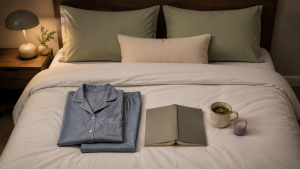
I remember nights when I'd toss and turn, staring at the ceiling until 2 a.m., only to drag myself through the next day feeling foggy and irritable. That changed when I started paying attention to my body's natural rhythms. Sleep isn't just downtime—it's when your circadian rhythm resets, helping regulate energy, mood, and even hormone balance through light exposure and daily patterns.
Over time, I built a routine with small, everyday habits that often lead to steadier rest without drastic changes. These 10 science-informed habits group into daily rhythms: morning anchors, intake boundaries, meal and movement timing, bedroom setup, and evening wind-downs. They're drawn from what tends to support better sleep for many, like me. Track your mood and wake-ups in a simple journal to see what clicks for you.
In my easy daily plan for deeper nighttime rest, I layer these in step by step. Let's break them down so you can experiment too.
Anchor Your Day with Morning Light and Wake Times
Why It Helps
Your circadian rhythm acts like an internal clock, cued by light and consistency. Morning sunlight signals your brain to suppress melatonin (the sleep hormone) and boost alertness through serotonin pathways. This reset often carries through the day, making evenings feel naturally sleepier.
A consistent wake time reinforces this rhythm, even on weekends. Without it, your body struggles to predict rest, leading to uneven energy. Studies on shift workers show irregular wake-ups can disrupt sleep quality, but steady mornings tend to stabilize it over time.
What to Try
- Habit 1: Morning sunlight exposure. Wake up and open curtains within 30 minutes. Step outside for 10-30 minutes—walk the dog, sip coffee on the porch, or just stand in natural light. Cloudy days? A bright lamp works as a backup.
- Habit 2: Fixed wake-up routine. Set your alarm for the same time daily, placing it across the room to force you up. Follow with a quick stretch or hydration. Avoid snooze— it fragments your rhythm.
Try these for a week and note your midday energy. Small shifts here often pave the way for easier nights.
Draw the Line on Afternoon Caffeine and Evening Drinks
Why It Helps
Caffeine blocks adenosine, a chemical that builds sleep pressure, with a half-life of 5-6 hours—meaning that afternoon latte can linger into bedtime. This often delays sleep onset and reduces deep rest stages. Evening alcohol, while sedating initially, fragments sleep by revving your stress response later.
Both disrupt the gradual cortisol drop needed for unwind. Limiting them helps your body wind down naturally, supporting longer, restorative sleep cycles.
What to Try
- Habit 3: Caffeine cutoff by early afternoon. Stop coffee, tea, or soda by 2 p.m., or 8 hours before bed. Switch to herbal tea like chamomile. Track intake in your phone notes to spot patterns.
- Habit 4: Evening alcohol limit. Cap at one drink, finishing 3 hours before bed. Opt for mocktails or sparkling water with lemon. Pair with a filling snack to blunt effects.
Safety / When to Be Cautious
Stay hydrated—caffeine and alcohol are diuretics. If you have reflux or dependency, taper gradually and sip water alongside.
Time Meals and Movement for Deeper Night Rest
Why It Helps
Heavy late meals spike digestion when your body prefers rest mode, raising core temperature and blood sugar swings that interrupt sleep. Lighter, earlier dinners align with circadian dips, easing melatonin rise. Daytime exercise boosts endorphins and deep sleep pressure without evening overstimulation.
Movement in daylight reinforces your rhythm, often leading to quicker sleep onset. Timing matters—late workouts can mimic caffeine's buzz.
What to Try
- Habit 5: Light dinner 3 hours before bed. Aim for veggies, lean protein, and whole grains—think grilled chicken salad. Portion to 70% full. Avoid fried or spicy if sensitive.
- Habit 6: Midday movement session. Walk 20-30 minutes after lunch or do yoga mid-afternoon. Keep it moderate—no HIIT post-6 p.m. Build to 150 minutes weekly.
Monitor digestion and energy post-meal. These tweaks often smooth out restless nights.
Turn Your Bedroom into a Cool, Dark Retreat
Why It Helps
Your body temperature drops to initiate sleep, thriving at 60-67°F (15-19°C). Cooler air promotes this drop, signaling rest. Darkness blocks light that suppresses melatonin, creating a cave-like cue for deeper cycles.
Poor setups keep you alert, but optimized ones often extend sleep duration. As explored in 5 bedroom tweaks for immediate sleep gains, these basics amplify results.
What to Try
- Habit 7: Cool bedroom temperature. Set thermostat to 65°F. Use breathable sheets and a fan. Crack a window if safe.
- Habit 8: Total darkness setup. Blackout curtains, eye mask, or tape LEDs. Remove clocks— their glow tricks your brain awake.
Safety / When to Be Cautious
Check for fabric allergies; choose cotton or hypoallergenic. If cold-sensitive, layer blankets.
Ditch Screens and Build a Gentle Wind-Down
Why It Helps
Blue light from screens mimics daylight, halting melatonin for hours via retinal cells. This spikes cortisol, delaying drowsiness. A screen-free ritual lowers stress hormones, easing into parasympathetic rest mode.
Relaxation practices like breathing shift focus inward, often reducing racing thoughts that fuel insomnia.
What to Try
- Habit 9: Screen curfew 1 hour before bed. Dim lights at 9 p.m., read a book or listen to podcasts. Use night mode if needed, but unplug fully.
- Habit 10: 10-minute wind-down ritual. Try 4-7-8 breathing: inhale 4 seconds, hold 7, exhale 8. Journal three gratitudes. Details in how to wind down with breathing before bed.
Experiment one week—track fall-asleep time. It often feels transformative.
Your 10-Habit Sleep Checklist
| Habit | Why It Helps | Easy Way to Start |
|---|---|---|
| 1. Morning sunlight exposure | Resets circadian rhythm via serotonin boost | 10-30 min outside post-wake |
| 2. Consistent wake-up time | Stabilizes daily rhythm | Alarm across room, no snooze |
| 3. Afternoon caffeine cutoff | Lets adenosine build sleep pressure | Stop by 2 p.m., switch to herbal |
| 4. Evening alcohol limit | Prevents sleep fragmentation | One drink max, 3 hrs pre-bed |
| 5. Light dinner 3 hrs before bed | Eases digestion, aids temp drop | Veggies + protein, 70% full |
| 6. Midday movement | Builds deep sleep drive | 20-min walk after lunch |
| 7. Cool bedroom (65°F) | Promotes body temp drop | Fan + breathable sheets |
| 8. Total darkness | Boosts melatonin | Blackout curtains + mask |
| 9. Screen curfew 1 hr pre-bed | Blocks blue light interference | Read book instead |
| 10. Wind-down ritual | Drops cortisol, calms mind | 4-7-8 breathing + journal |
Print this or screenshot for your fridge. Check off daily and track signals like morning grogginess or night wake-ups. Consistency at 80% often yields noticeable shifts in 1-2 weeks.
FAQ
How soon might I notice changes from these habits?
It varies by person—some feel energized in days, others in 1-2 weeks with steady tracking. Factors like stress play in. Log mood and sleep length to gauge progress, adjusting as needed.
What if my schedule makes consistency tough?
Prioritize wake time and light exposure—they anchor everything. Aim for 80% adherence on flexible habits like caffeine. Shift workers can adapt with portable light therapy.
Are naps okay with these habits?
Short 20-30 minute naps early afternoon can recharge without much disruption. Longer or late naps may steal night sleep pressure. Skip if you fall asleep easily at night.
Can these habits help with stress-related insomnia?
They often support relaxation by steadying rhythms and cutting stimulants. Combine with therapy if stress persists. Breathing rituals tend to help most here.
When should I talk to a doctor about sleep?
If unrested after 3+ weeks, snoring loudly, or extreme daytime fatigue hits. These habits complement care, not replace it. Conditions like apnea need pro input.